
Without factoring in the rupee-dollar exchange rate, the index has been touching new all-time highs repeatedly.
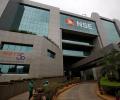
FPIs' ownership in NSE-listed companies reached a five-year high of 22.74 per cent in December 2020 on the back of huge net inflow of Rs 1.42 lakh crore by such investors in the third quarter.

Star Health and Allied Insurance's Rs 7,250-crore initial public offering (IPO), the third largest this year and eighth largest ever, just about managed to make it despite a poor response from investors, garnering just 79 per cent subscription, forcing the investment bankers to prune offer for sale (OFS) component. This is the second large offering after digital payments major Paytm this year to receive a lukewarm response from investors, a sign that despite the IPO frenzy investors are discerning when it comes to pricing. As Star Health didn't meet the profitability criteria, its IPO required a mandatory 75 per cent subscription from qualified institutional buyers (QIB).
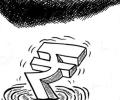
Good foreign capital inflows failed to restrict the rupee's fall against the dollar
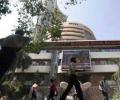
Hero MotoCorp, Bajaj Auto, M&M and Tata Motors were the major winners.

Analysts say lack of strong moves in stocks or sectors contributed to markets moving indecisively.

Analysts attribute the surge to a host of factors, particularly the interest shown by the retail investors in these two market segments.
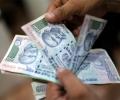
Fresh selling of dollars by banks and exporters on the back of good foreign capital inflows helped the rupee
.jpg)
In the global market, the US dollar rose against the basket currencies in early trade as US President Barack Obama called for diplomacy in dealing with alleged chemical weapons attack in Syria but kept open the possibility of military action against the Assad regime.

The Sensex has slid 18.5 per cent from its January 2015 peak.

Fresh foreign capital outflows also affected the rupee sentiment, a forex dealer said.

While the FPI limit on most bond issues would not be raised above 6 per cent, there would be some in which there would be no limits, reports Arup Roychoudhury.

All sectoral indices on the BSE and NSE ended in the red, led by realty, banking, metal, pharma, pharma and financial stocks.
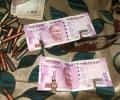
The American currency regained its buoyant strength after a brief sideways movement following overnight US Fed's optimistic tone about the future of the US economy

Top gainers in the Sensex pack were TCS, Bharti Airtel, Infosys, Axis Bank, L&T, ITC, PowerGrid, HCL Tech and Tata Steel, ending up to 2.39 per cent.

In the broader market, BSE midcap and BSE smallcap indices underperformed the larger counterparts and ended flat with a negative bias.

Forex dealers said strengthening of the euro against the dollar overseas and a higher opening in the domestic equity market also supported the local currency.

SBI was the top gainer in the Sensex pack, rallying over 10 per cent, followed by Kotak Bank, Dr Reddy's, UltraTech Cement, ITC and HDFC Bank. On the other hand, Axis Bank, Bharti Airtel, ICICI Bank, Maruti and HCL Tech were among the laggards.

The broader NSE Nifty went up to a fresh life-time high of 10,494.45, but failed to stay on the top as it slipped and closed down 19 points, or 0.18 per cent, at 10,444.20.

Dr Reddy's was the top gainer in the Sensex pack, rising over 3 per cent, followed by PowerGrid, TCS, HCL Tech, Infosys and Reliance Industries. On the other hand, L&T, IndusInd Bank, Bajaj Finserv and Bharti Airtel were among the laggards.

The benchmarks logged the first weekly loss in three weeks.

SBI was the top gainer in the Sensex pack, spurting over 2 per cent, followed by TCS, Tech Mahindra, HUL, Bajaj Finance, Kotak Bank and Titan. On the other hand, IndusInd Bank, PowerGrid, Bharti Airtel, Asian Paints and HDFC Bank were among the laggards.

The Nifty too slipped below the psychologically important 11,000 mark.

'In the overall global portfolio, India's weighting has come down in the past seven months.'

LIC's Rs 3,000 crore bid helped HAL reach the minimum 10 per cent dilution threshold required for listing, sources said

Insurance firms want more clarity before increasing foreign partner's stake.

When big offers hit the market, broader indices corrected 2-4%

Brokerage firm Bank of America Merrill Lynch (BofA-ML) on Monday said the ongoing US government shutdown is positive for the country, as it gives additional time to recoup the forex reserves.

Metal stocks were trading under pressure while IT, auto, realty stocks gained in today's deals
Weakness in dollar in the overseas market also boosted the rupee value

Major gainers include L&T, Asian Paints, Vedanta, Tata Steel, Coal India, Infosys, M&M, Adani Ports, Maruti Suzuki, Axis Bank, HDFC, Power Grid, ONGC, Tata Motors, Sun Pharma, ITC, IndusInd Bank, HDFC Bank and SBI
The broader 50-issue NSE Nifty too slipped from its record high, shedding 10.30 points or 0.09 per cent to end at 11,346.20.
The NSE 50-share index, after moving between 10,572.20 and 10,546.20, ended at 10,565.30, up 39.10 points, or 0.37 per cent.
The rupee appreciated 7 paise to 79.74 against the US dollar in early trade on Thursday as a positive trend in domestic equities supported the local unit. However, a strong American currency overseas and forex outflows restricted the rupee's gain, dealers said. At the interbank foreign exchange, the rupee opened at 79.72 against the American dollar, then went lower to trade at 79.74 against the greenback in early deals, registering a gain of 7 paise over the last close.

The BSE Sensex moved up 103 points to 35,319.35, while the wider NSE Nifty finished at 10,741.70, up 23.90 points.

June was a memorable month for the 101-year-old Tamilnad Mercantile Bank (TMB). Last month, the Thoothukudi-based bank witnessed two new landmarks in a history in which the last three decades could easily qualify for a Kollywood blockbuster.

Promoters' holding in private sector BSE 500 companies declined to 43.4% in Sept

The 50-share Nifty bounced 83.35 points, or 0.86 per cent, to 9,794.15 at close.

The broader NSE Nifty, after cracking the 10,600-mark, ended 82.30 points, or 0.77 per cent, lower at 10,589.10.

The Chinese government is imposing severe restrictions on their tech companies - whether it is on data security, marketing practices or floating an IPO. Should this be music to the ears of Indian start-ups and home-grown private equity (PE) funds? Ask Indian start-ups and the answer is a resounding "yes".
